America’s Love for Pump Shotguns

Let’s Find Out Why the Slide Action Shotgun Still Has a Place in Every Hunter’s Gun Safe
By Steve Felgenhauer
I grew up in farm country. Back then, Ohio was a shotgun state which only allowed rifled slugs for deer hunting. Our deer hunting consisted of many deer drives and often the action got fast paced and the necessity of a quick follow up shot was needed. This meant a repeating shotgun and for me, I became a pump gun guy.
I carried a Model 12, handed down to me from my dad. I lugged it countless miles as I hunted everything from deer to groundhogs. It sported a 30-inch barrel, and while it was not very handy for deer hunting, it would knock even the toughest fox squirrel out of the tallest tree in the hollow. I loved that gun. I took my first buck with it. I also took my first limit of squirrels and more rabbits and groundhogs than I can recall.
A Troubled Beginning
The first patent for a slide action shotgun goes back to 1854 in Britain. William Krutzsch was granted a patent in 1866 utilizing the first magazine on a pump shotgun. Prior to this, repeating shotguns were double barreled. The first successful commercial pump shotgun in the U.S. was the Spencer design in 1882 and introduced to market in 1883. This new shotgun was expensive to manufacture, and Spencer, who was unable to make a profit, sold the patent to Francis Bannerman. Bannerman’s version of the Spencer was introduced in 1890.
In 1893, John Browning designed the Winchester Model 1893 pump action shotgun, and Bannerman filed suit against Winchester. The lawsuit involved thousands of people. In court, Winchester provided several pump gun patents prior to Spencer’s patent of the 1882 owned by Bannerman, including the Krutzsch patent. The court, armed with this information, threw out Bannerman’s lawsuit. Sales for the Winchester 1893—and the much more refined Winchester 1897—quickly overtook Bannerman’s design, and in 1907 its production ceased.
The Winchester 1897
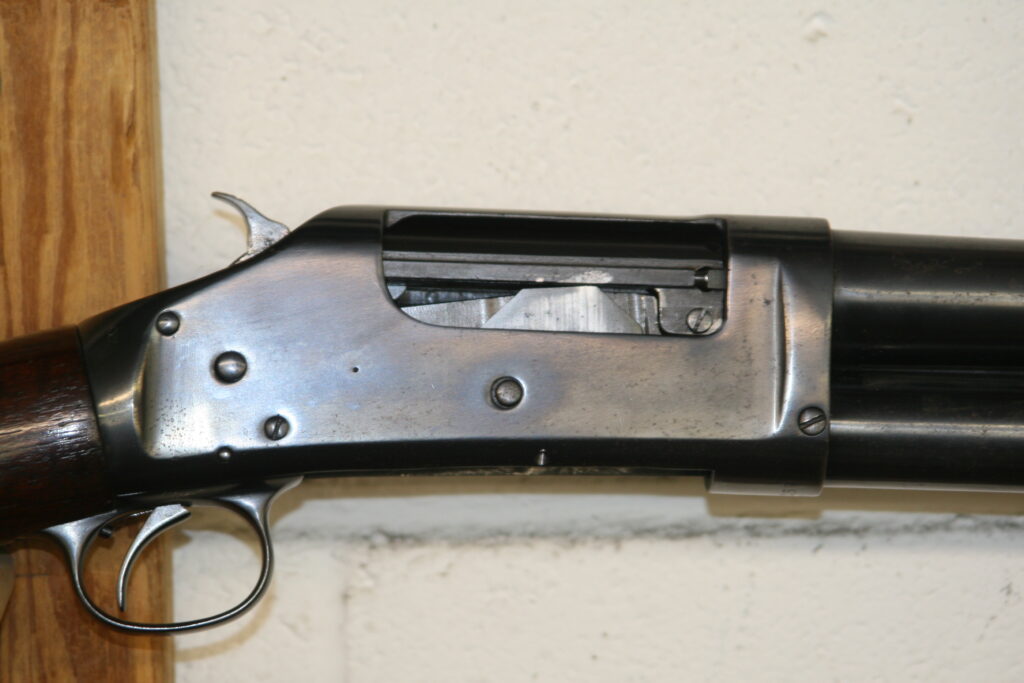
The 1897, another of Browning’s designs, picked up where the 1893 stopped and it far surpassed all expectations, selling more than 1,025,000 guns in its 60-year run. The ’97 was in the duck blind, in the field, and even served its country during World War I and World War II, and other conflicts, along with law enforcement throughout the U.S. It was affectionally called the “thumb buster” by those who allowed their shooting hand to ride too high on the pistol grip where the bolt would pinch the web of their hand when the gun was pumped. The ’97’s days were numbered after the introduction of the Model 1912, and by 1957 the heyday of hammerless shotguns had arrived.
The Stevens 520/620 Shotguns
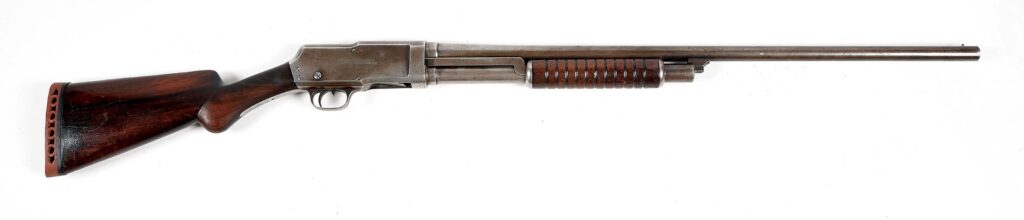
With its easily recognizable double humpback receiver, the Browning-designed Stevens 520 was introduced in 1909. It featured several patents including a unique take down system. The 520 was first introduced under the Stevens name, however, in 1920, Savage purchased Stevens and continued producing the popular shotgun. During its 30-year production run, some of the “quirks” in its appearance such as the shell latch/cartridge stop arrangement and safety placement were made more operator friendly. A 16-gauge was introduced in 1928 and two years later a 20-gauge model was added. Though the 520 was dropped from the catalog in 1929, it was still in full production for another 10 years. The 520A offered a sleeker design than its older brother and was sold mainly as a store brand (Sears & Roebucks and Montgomery Wards) or under the budget (Stevens) Riverside Arms name.
The more refined Stevens 620 was introduced in 1927 chambered in 12-gauge. A year later a 16-gauge was added followed by the 20-gauge. In 1940, the 620A was introduced featuring modifications and updates to improve shooter satisfaction. World War II put a halt on commercial production, and Savage answered its country’s call with trench and riot versions of both models. They were renamed the M520-30 and the M620A, and were supplied to the U.S. military.
The Winchester Model 12 Shotgun
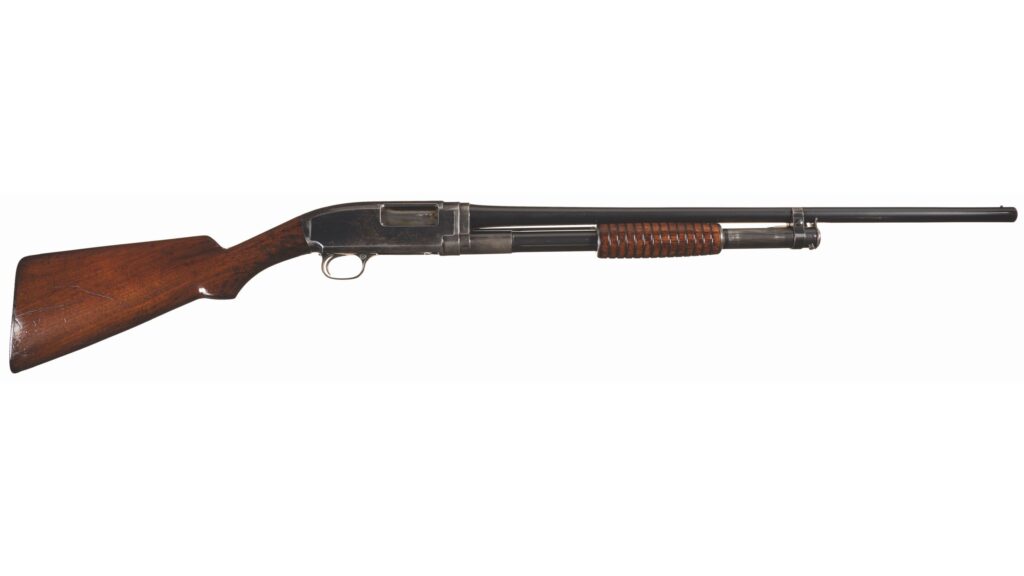
The Winchester Model 1912 (Model 12 as it became known in 1919), was designed by T.C. Johnson of Winchester and given the monicker of “the perfect repeater.” In 1915, the Model 12 sold more than 100,000 guns. By 1963 it had sold nearly two million before its 51-year production run had halted. The Model 12 was offered in 12-, 16-, 20-, and 28-gauge, a Heavy Duck model chambered in 3-inch for the 12-gauge, as well as an array of trap and skeet models. It too saw plenty of action in military and law enforcement throughout the U.S.
The Ithaca 37 Shotgun
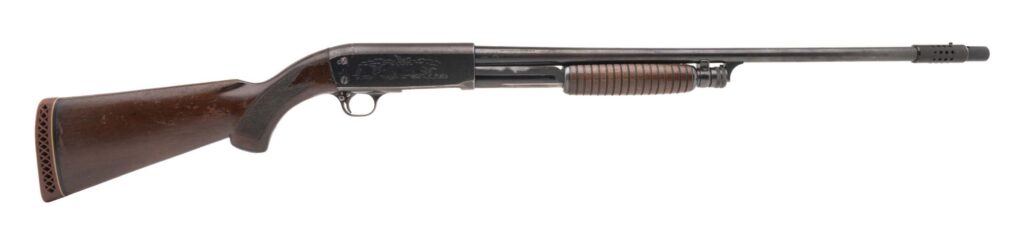
In 1937, another John Browning design was introduced by Ithaca, the Model 37. For more than eight decades, the grand old man of hammerless pump shotguns—still in production today—has served target shooters, hunters, military, and police alike. It boasts more than two million guns sold.
The Model 37 departed from the Model 12 by loading and ejecting from the bottom instead of ejecting spent hulls from the side. This made it a great choice for right or left-handed shooters. With a cult-like following, the Deerslayer, a short-barreled, rifle-sighted deer gun is still popular for hunters where shotgun slugs are required or preferred.
The Remington 870 Shotgun

In 1950, Remington hit the proverbial home run with its new pump shotgun, the 870. Earlier designs by Remington were plagued by either a fragile design or were too expensive to produce. The 870 was cheaper to manufacture and much more affordable for shooters. It could be maintained easily by removing two pins holding the trigger group in place. With replacement barrels easily installed, it turned a duck gun into a handy deer shotgun simply by switching barrels. When Remington went into bankruptcy, many feared the 870 was gone forever, but thankfully, RemArms has resurrected it.
The Mossberg 500 Shotgun
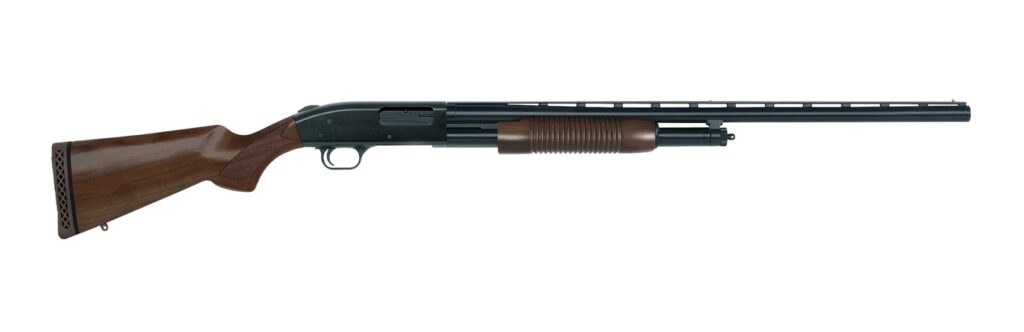
Mossberg’s entry of their ever popular 500 made quite a splash in 1961. One of its most popular features is its top-mounted tang safety providing ambidextrous use. In addition, its price appeals to not only hunters but police and military as well, having entered into military service in 1979. With more than 11 million sold, the 500 is by far the most popular pump shotgun in the U.S. The 500 and its twin, the 590, account for the majority of all police shotguns in the U.S. today.
Why Use A Pump Shotgun?
The pump gun’s allure is … it works. Tales from hunters during the heyday of waterfowl seasons of past boast of the pump’s reliable performance in cold weather. An old friend from back East would sit in my shop retelling the tale of how everyone’s semi-autos had frozen solid while he kept shooting the big sea ducks with his Model 12.
For tactical use, the pump gun is a no brainer. In the case of a misfire, the operator only needs to shuck the dud shell out and load a fresh one in—it happens faster than reading this sentence. Unlike gas operated semi-autos which must have enough gas force to operate the action, the pump relies on a shooter’s own power, and there is no sound that can make a would-be home intruder’s blood run cold like the racking of a pump shotgun.
While not as popular as they once were, the pump gun is still alive and well. From cowboy shoots (The Winchester ‘97 is one of the more popular shotguns in the Old West), to the trap range, the duck blind, or the deer woods, the pump gun still holds a place in many shooters’ hearts and a secure spot in their gun safes.