How to Plan the Perfect Road Trip Hunt

Follow These Guidelines To Avoid Hiccups And Heartaches In Your Hunting Travels
Words & Images By Seth Bynum, DVM
One of the qualities I admire most about bird dogs is their sense of adventure. It requires little more than a subtle shift toward the truck or the rustling of a hunting vest for them to realize their day is taking a turn for the better. As a sporting dog enthusiast, I’m continually inspired by their drive and enthusiasm to practice their craft. Hunting dogs will drop what they’re doing and load up for a multi-week road trip with the most subtle of invitations.
I’m envious of their enthusiasm, their seemingly endless PTO, and their care-free attitude about planning for such an involved endeavor. Hunting dogs don’t bother themselves with trivialities like forecasts, long drives, or logistics. But having a highly motivated wingman doesn’t eliminate the need for thoughtful preparation on a multi-day outing. If anything, it increases our responsibility to plan carefully on their behalf. What follows are the principles I rely on to keep dogs safe, healthy, and performing at a high level throughout extended travel. Feel free to learn from my mistakes.
What If Something Goes Wrong?
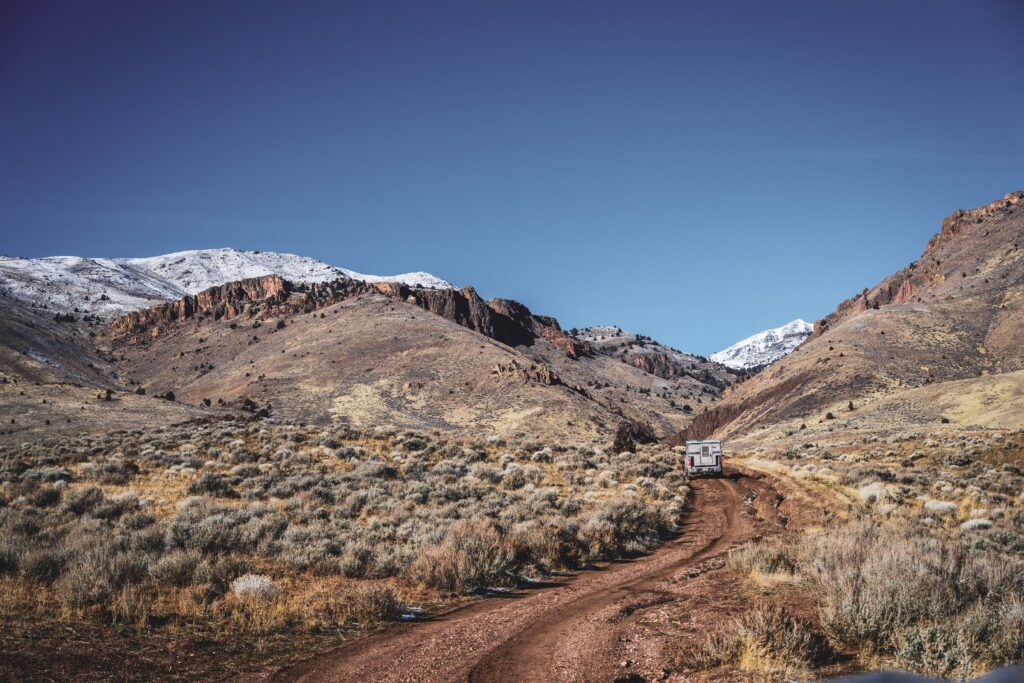
I’ve learned over the years that the larger and more comprehensive the disaster mitigation plan, the less likely you are to encounter a major issue. Before leaving home, identify veterinary clinics that serve the region you plan to hunt. In much of the West, that may mean the nearest clinic is several hours away, and you can count on spotty cell service in many of the best hunting areas.
Google works well for finding these clinics, but I strongly recommend Hunt.Vet as a starting point in your veterinary clinic research. Make sure the veterinarian you work with on the road at least brings an understanding of sporting dog medicine, or better yet, owns, trains, and hunts with dogs, too. As hunters, we tend to appreciate the perspective of those who’ve walked a mile in our boots.
Hunt.Vet serves as a crowd-sourced directory of sporting dog-friendly veterinarians. The site aims to solve a longstanding problem in our community: finding veterinarians who truly understand sporting dogs and the intricacies of elite canine athletes. As you’ve already discovered, not every vet is familiar with the physical demands of multi-day field work, the occupational hazards associated with hunting, or the expectations of owners who rely on their dogs as working partners.
The veterinarians included in this database earn their credibility from within the sporting dog community itself. Bird hunters, field trial competitors, and working dog owners submit recommendations based on real-world experience. Clinics you’ll find in a search appear solely because fellow sporting dog enthusiasts have identified them as knowledgeable, practical, and comfortable treating canine athletes.
Perhaps the most valuable feature of Hunt.Vet is its ability to let you search in advance by location. If you are planning a trip to the Dakotas for mallards, Montana for big cats, or Arizona for desert quail, you can identify sporting dog-friendly veterinarians by city or ZIP code near your hunting destination before you ever load up the truck.
As a disaster mitigation tool, Hunt.Vet allows visitors to the site to view contact information, location, and specific services offered by clinics. Verified veterinarians (those who actively monitor their own profiles and have been further validated by the Hunt.Vet team) earn a numerical score that helps quantify the degree to which these sporting dog docs offer services or possess first-hand expertise deemed valuable to the hunting dog community.
For traveling hunters, the algorithm awards bonus points for clinics in rural areas that offer emergency services to new clients. Veterinary shortages and burgeoning demand in rural America continues to tax the resources of small, independently-owned practices in some of the nation’s most coveted hunting destinations. The Hunt.Vet directory highlights doctors who understand that medical emergencies rarely follow a convenient schedule or abide by normal office hours.
Field First Aid: Keep It Simple and Know Your Limits
While I find it reassuring to have a veterinarian on hand in the event of a crisis, I strongly prefer avoiding a potentially expensive vet visit altogether while on the road. With a well-stocked first aid kit and a little training, you can successfully manage most minor injuries in the field with basic supplies, a calm demeanor, and sound judgment.
The best kit is always the one you have with you. I can speak firsthand that your first aid supplies hold little value left back at the truck or at home. Over the years, I’ve preached the value of carrying a lean field kit in my vest or pack for near-term issues and maintaining a comprehensive base station back at the truck. Your field kit should be light but mighty, with each item’s utility weighed against the likelihood of needing it and the burden its heft contributes to the load.
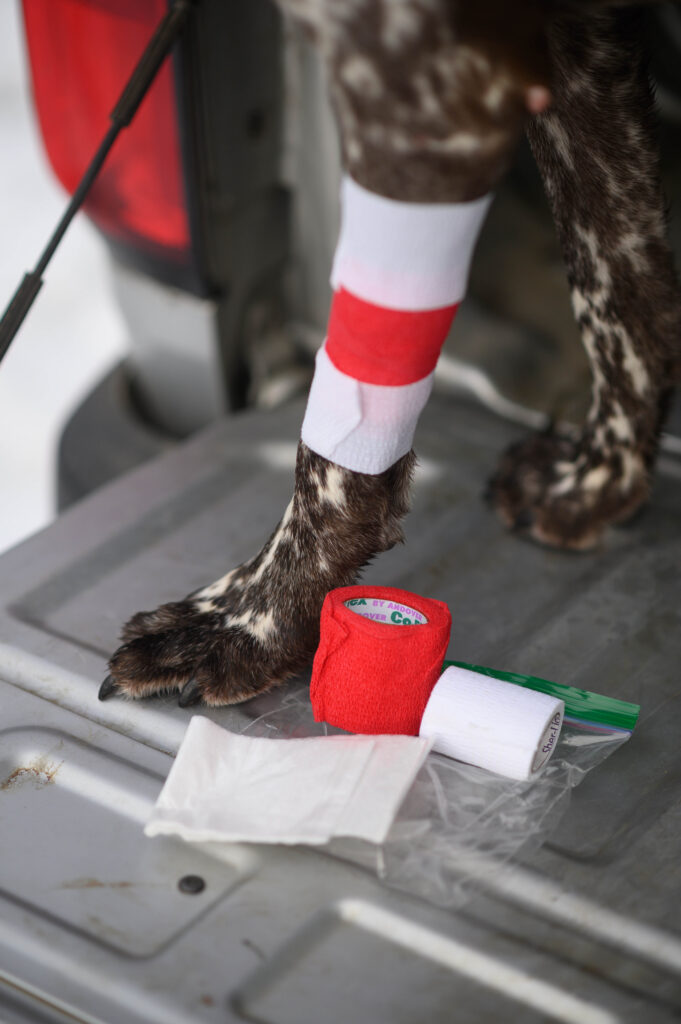
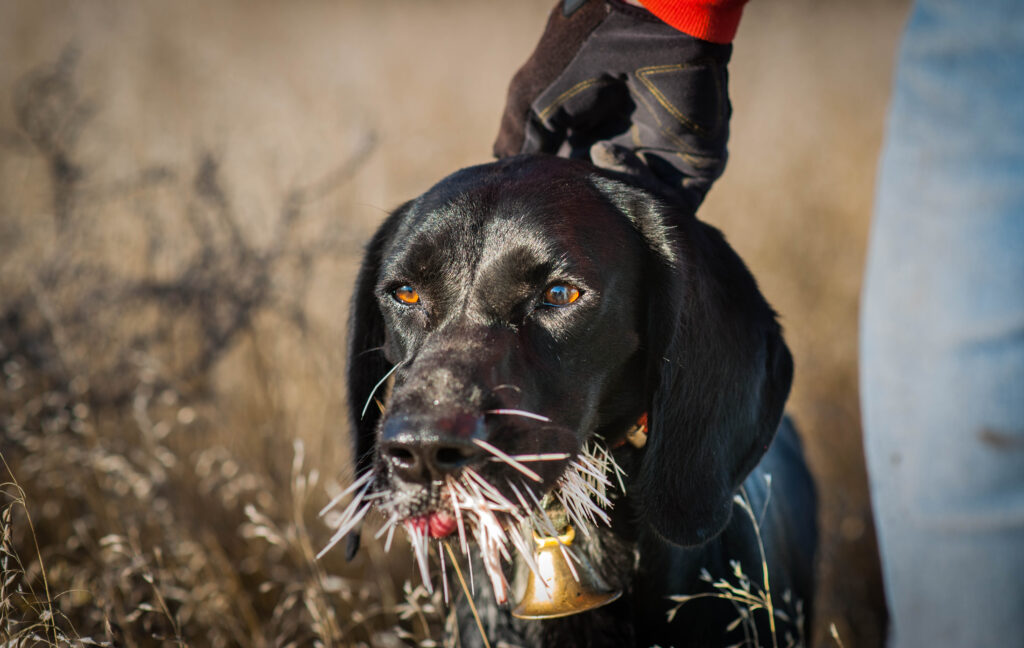
Bandage materials and gauze are compressible and light, and work well for covering cuts from injuries until I can address them appropriately with sterile cleaning and possibly sutures back at the truck. A small squeeze bottle of sterile saline helps dislodge grass seed or other potentially dangerous or annoying debris from my dogs’ eyes. A robust set of hemostats work well for removing porcupine quills, but there’s no need to double up if you already tote needle nose pliers or a multitool in your vest.
The truck kit builds on the field kit’s foundation with more extensive chemical wound sterilants and a skin stapler. I also keep a lightly stocked pharmacy for common field related injuries that can benefit from medication. While many clinicians are trending away from prescribing meds “just in case,” you may find a veterinarian in the Hunt.Vet directory who understands what our dogs go through in their adventures and sees the value in planning ahead.
Take time before the season starts to familiarize yourself with your kit’s contents and acquire basic knowledge of how and when to use them. Don’t bother carrying things you feel uncomfortable using. A bleeding dog on a tailgate does not provide the calm, supportive environment for expanding your first aid skills, and you’re unlikely to get enough cell service to stream a YouTube video in the heat of the moment anyway.
Have the self-awareness to know when to treat things within your skillset, and, more importantly, when to throw in the towel. Not every wound should be handled roadside, even for trained veterinarians. Deep lacerations, punctures near joints, eye trauma, heat injury, or persistent lameness deserve professional evaluation. When in doubt, find a vet and take them in. In these stressful scenarios, having pre-identified clinics through resources like Hunt.Vet becomes invaluable.
Nutrition: Sustained Energy for Serious Effort
Multi-day hunting trips require extraordinary caloric intake to offset the sizable energy demand of serious working dogs. A hard-driving dog can burn thousands (estimated upwards of 10,000 in elite athletes) of kilocalories in a single day.
Performance dog foods are formulated with higher fat and protein levels specifically to support endurance. Fat (not carbohydrates) serves as the primary fuel source for canine athletes. High-quality performance formulas also offer significant calorie density—often approaching 500 kcal per cup—which is critical when digestive capacity limits how much volume a dog can consume at each feeding.
Fluctuations in temperature and humidity necessitate the inherent shelf stability most quality dry commercial dog foods boast as well. In my experience, these diets can withstand the abuse of extreme heat or sub-zero temperatures without degrading or turning rancid mid-adventure. While I rarely recommend them in practice anyway, a multi-day trip with temperature swings is not the time to rely on perishable and fragile raw diets.
If I have an unexpected breach in food security, I appreciate the fact that I can usually rush ship or pick up the commercial kibble I feed my dogs locally. Boutique brands, in addition to lacking any appreciable research behind their formulas, struggle in distribution, especially when on a road trip hunt.
Gut Health and Travel Stress
Travel stress, even for fun activities like hunting, can contribute to intestinal unrest in our dogs. Changes in environment, feeding schedules, and excitement trigger a rise in the stress hormone cortisol, which plays a role in modifying the delicate balance of good and bad bacteria in the gut. The result is often diarrhea. If you’ve dealt with a blow out on the road, you already know it’s a situation best prevented than treated.
Beyond inconvenience, diarrhea predisposes dogs to dehydration and electrolyte imbalance, two scenarios that can impact their performance at a minimum and lead to potentially dangerous medical scenarios if left untreated. A quality probiotic added before and during travel can help maintain a healthy microbial balance. I like to start Purina’s Fortiflora about a week before my travel and continue it daily until we’ve resumed our routine back home. It’s a simple, highly palatable preventative measure dogs appreciate that can spare you significant complications on the road.
Do all of these things well, and you’ll undoubtedly free yourself to focus on what matters most: new ground under your boots, the flurry of wild game, and the dogs casting confidently into the wind out ahead.