Will Clay Shooting Help or Hurt Your Wild Game Hunting?

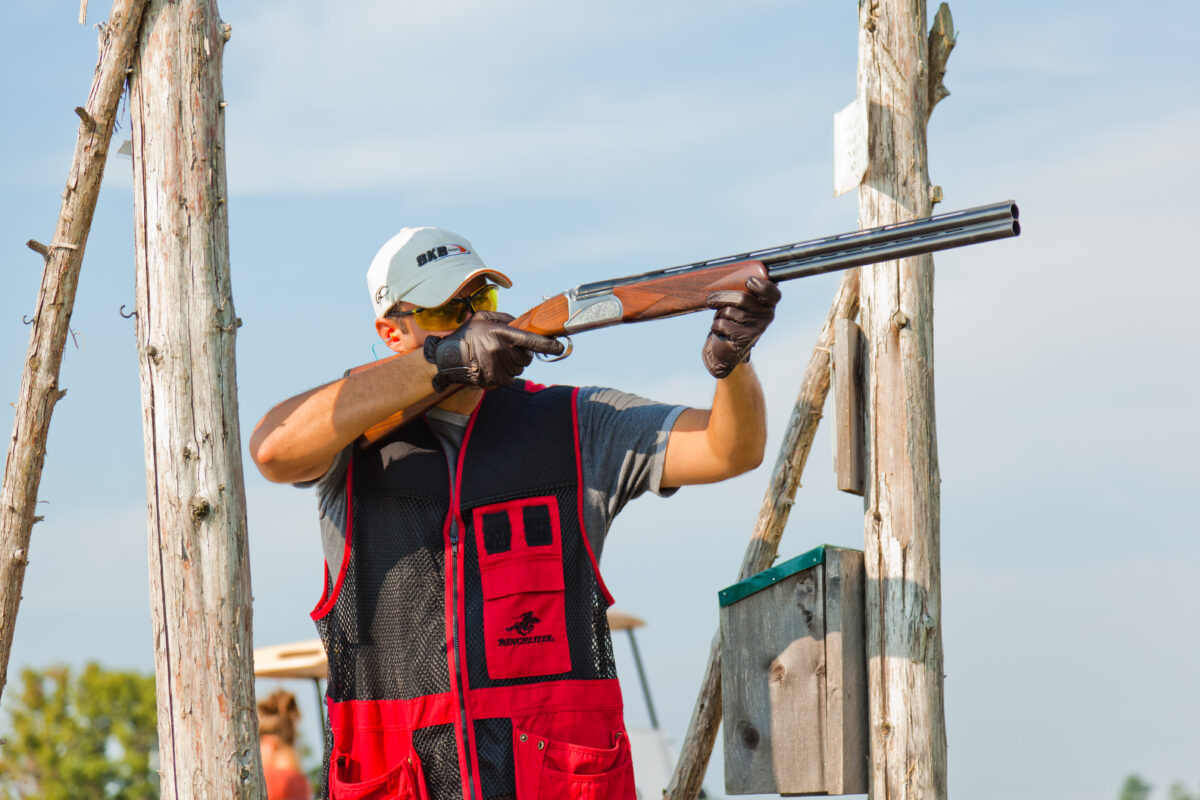
Trap, skeet, and sporting clays can sharpen your shooting skills but success on the range doesn’t always translate directly to the field.
By Brad Fitzpatrick
There’s an old saying that says if you want to kill more upland birds and ducks you need to spend time in the summer shooting trap, skeet, and sporting clays. The phrase has been repeated so often that hunters have come to accept it as gospel. A failure to spend time on the clay range is also used as a ready excuse when we miss. I can’t count the times a hunter beside me has missed a bird and, while shaking their head, lamented for not spending more time breaking clays. If I’m being honest, I’ve used this excuse myself.
But does shooting clay targets really help you kill more game? The answer is yes, but it’s more complicated than that. Clay target shooting can certainly improve your abilities, but there are aspects of shooting that you cannot learn on the target line. To clarify, let’s examine what clay target shooting can—and cannot—do to improve your shotgunning skills. And while shooting clays tends to be synonymous with wingshooting, any hunter who swings a shotgun at any wild game can benefit from bettering their gun handling and improving their shooting techniques while busting clays this summer.
Breaking Down Clay Games
To begin, we must narrow down “clay target shooting” to the specific disciplines—trap, skeet, and sporting clays. I lump five stand in with sporting clays, and there are “international” versions of trap and skeet that differ slightly from the American games. All have their benefits, and all teach specific shotgun skills.
Let’s begin with trap. For American trap (by far the most common variety) a single thrower is placed in front of the shooters and throws 108mm targets at around 45 miles an hour. Shooters start at the 16-yard line, and as they become more experienced they may have a handicap that moves them farther from the trap house—as far as 27 yards. International trap, which is also called “bunker trap,” is quite different. There are over a dozen throwers in a bunker and slightly larger targets (110mm) are thrown at speeds to over 70 miles an hour. Shooters get two shots on international trap.
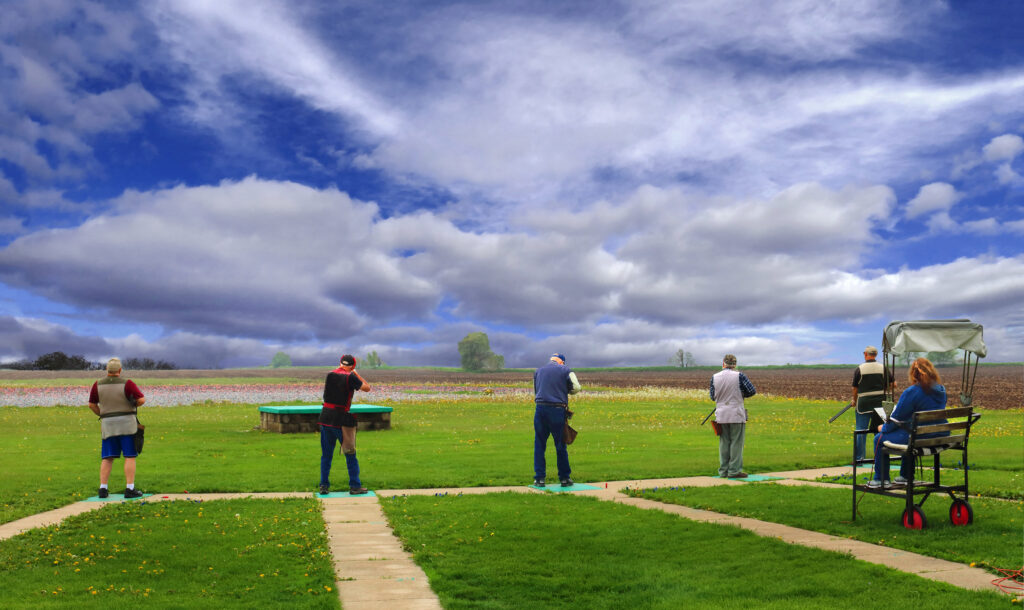
American skeet fields are semicircular in design with a left (high) house and a right (low) house. The shooter moves in a semicircle to different stations, finishing on the eighth station which is almost directly between the high and low houses. There’s also an international version of skeet, but the concept is very similar, and the shooting field layout is the same.
Sporting clays doesn’t have standard pre-set field layouts like trap and skeet. Instead, it’s set up very much like a golf course. The shot presentation at all the stations may be very different, and you may have to shoot springing targets, high overheads, crossers, and even rabbits bouncing on the ground. The goal of sporting clays is to mimic real-life hunting situations as much as possible. Five stand is similar, but it requires less space. Five stations (stands) are set up in a row and at each station, shooters will fire on different target presentations. It offers more variety than trap or skeet without requiring as much real estate as a sporting clays course.
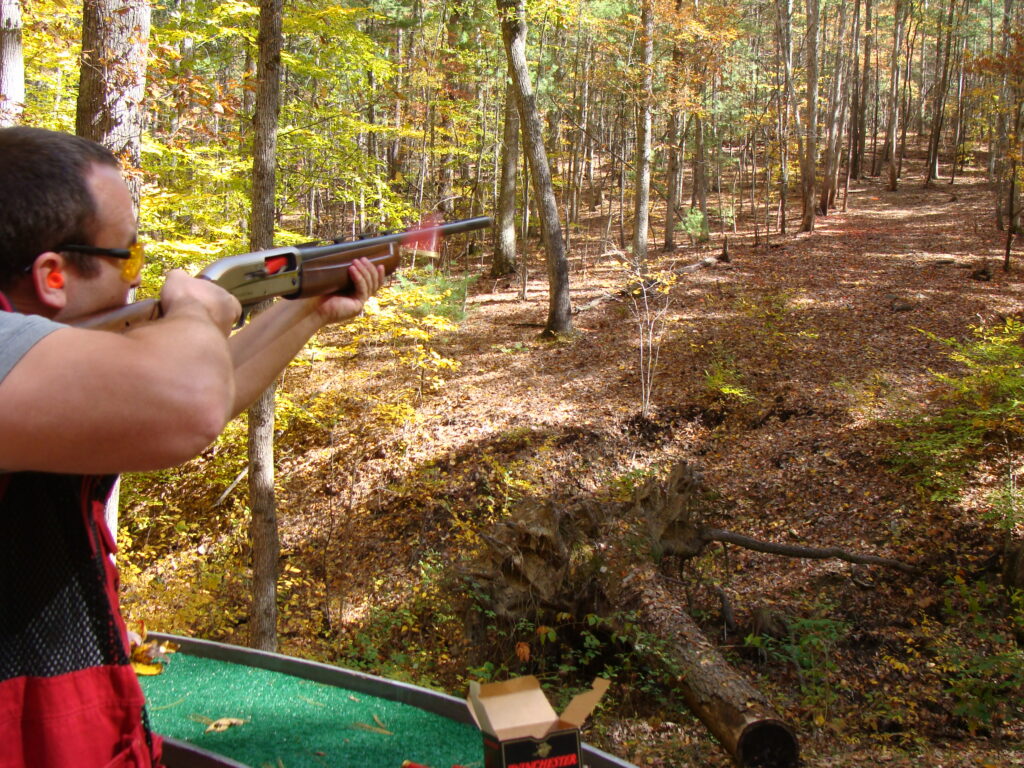
The Benefits of Clay Target Shooting
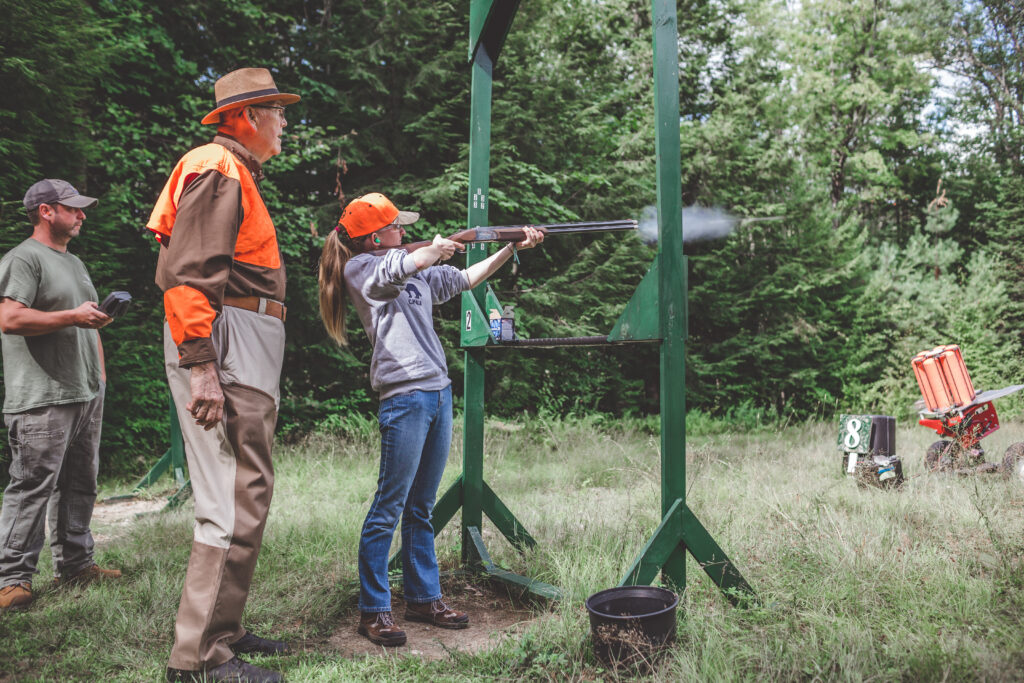
Clay target shooting is one of the best ways to learn basic shotgunning skills. Gun safety is key, and firearms must have open chambers until you are on the firing line. From there, you’ll learn the basics of shooting crossers (skeet) and outgoing targets (trap). I think this is the ideal place to begin your bird shooting training.
I shot birds before I broke clays, but after spending three years on a college trap and skeet club I was a much better shooter simply because I had training in the fundamentals of shotgunning. I learned gun mount and stance, how to hold and maintain a lead, and how to adjust to different shot presentations. When my kids are old enough to shoot shotguns, we’ll likely begin at the trap range since the shot presentation is so similar from one target to the next. Then they’ll graduate to skeet to master crossing shots and incoming targets (stations 1,7, and 8).
Sporting clays is undoubtedly one of the most realistic of all clay target games in that the targets mimic the movement of birds. However, I do feel that it’s easier to shoot sporting clays well if you have a background in trap and skeet. By learning how to shoot the most common shots—incoming, outgoing, and crossers—you’re better prepared to make adjustments as needed to hit targets on the sporting clays course. But sporting clays presents such an array of targets that you’ll be better prepared for the field because you’ll have seen so many different shot angles that you’ll be familiar with the common presentations of wild game. If you break enough high incoming clay targets in the summer, you’ll be better prepared to hit the first high incoming dove in September or a pintail whistling low over the dekes.
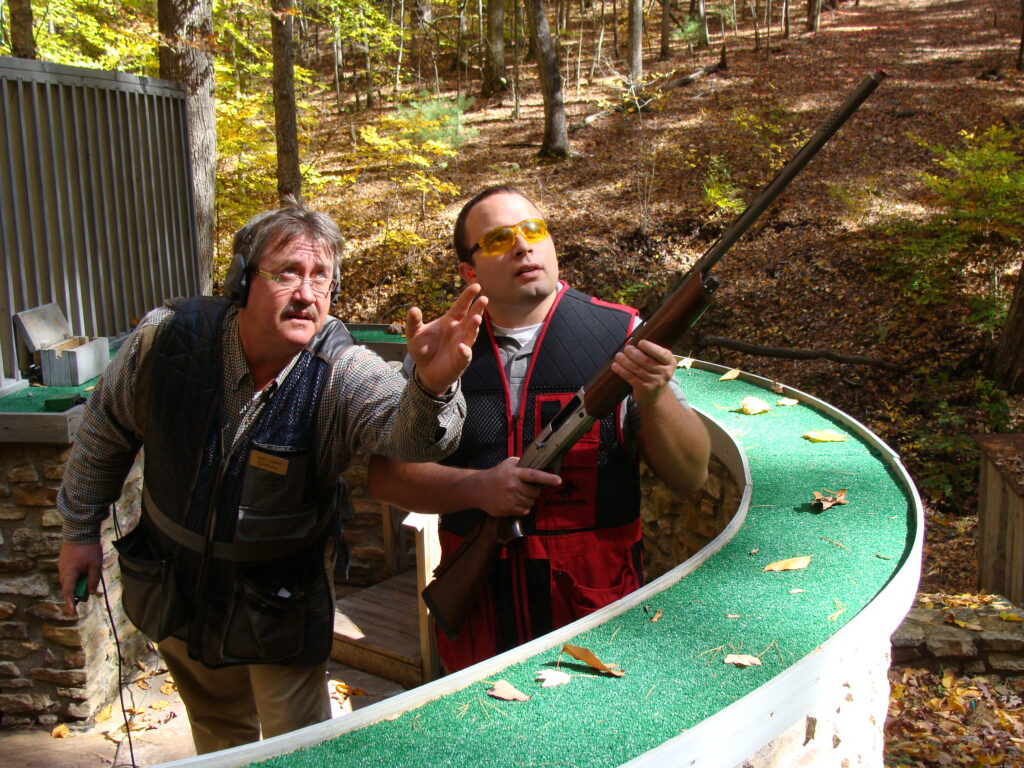
Aside from gun safety, obtaining a proper lead, follow through, and trigger control are some other key aspects of good wingshooting. And guess what? You’ll learn all those skills on a clays course. You may want to hire a coach, or, if that fails, find someone at the club who is qualified to instruct you. When you start shooting skeet or trap you’ll end up on a squad (group of five shooters), and outside of major competitions, I’ve never been on a squad when someone wasn’t willing to help a new shooter. You’ll also learn by watching. When I started shooting skeet I watched shooters between rounds, and I learned how the top shooters leaned, swung, and followed through. I also learned about stance. Some shooters stand wide, others are pretty tall, but I’ve seen both types of stance work.
Yes, breaking clays in the summer will very likely help you improve your shooting in the fall, and if you are a new shooter, your skills will drastically improve. Plus (and perhaps most importantly) shooting clay targets is a lot of fun. More than simply a means to improve your shooting skills, clay target games are a great way to spend a lazy summer afternoon. It’s also a great sport for kids, a place where they can learn proper, safe gun handling. There are also a growing number of high school and college sporting clays teams, and those are generally great places for hunters to meet with similar interests. I met some great friends on the clays course, some of whom I still hunt with today.
What Clay Shooting Can’t Teach
Clay games certainly make you a more well-rounded shooter, but I don’t believe they offer every skill that a hunter needs. First, many shooters have a separate clay target gun and field gun, and oftentimes these guns differ in action type, gauge, and stock pitch, cast, drop, and length of pull. Part of the reason for this is that shooters want to fit in with the crowd. You see a lot of wood-stocked over/unders on a skeet line, but camo pump guns aren’t as common. But if you’re a serious hunter you need to shoot the gun you carry in the field. Heck, I posted one of my best sporting clays scores using the same Winchester 1300 I carried in the field. The skills you learn with one gun will carry over to another to a large degree, but to be the best in the field you’ll need to break clays with the same shotgun.
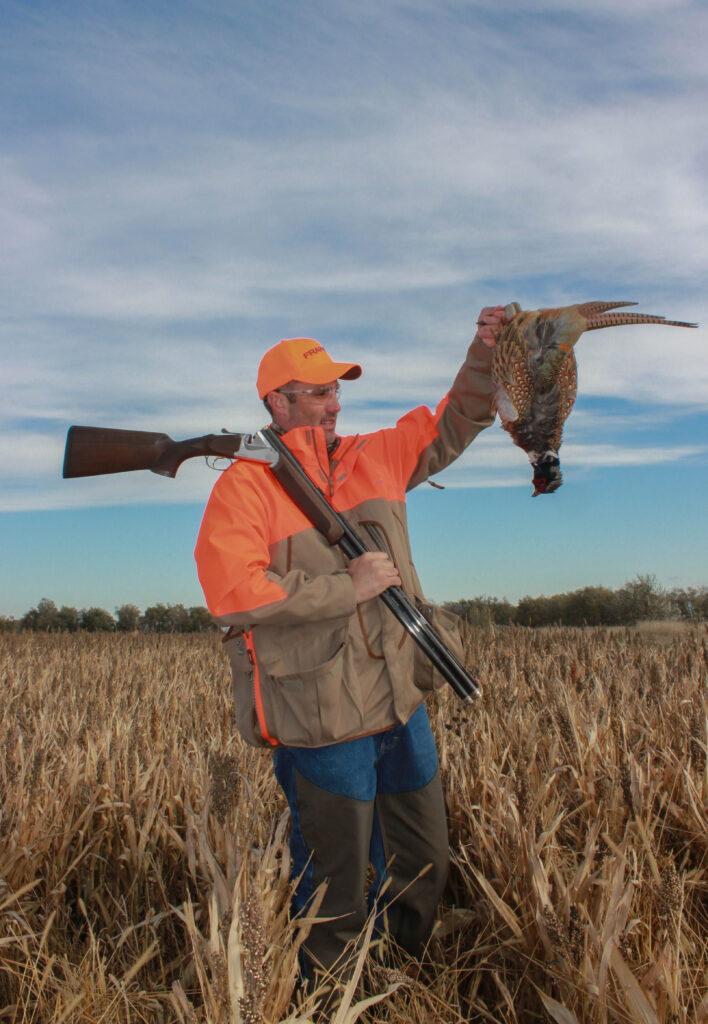
Some clay games don’t accurately mimic all aspects of field shots. For example, trap is a great way to learn the skill you need to hunt over pointing and flushing dogs. However, most people call for the bird with their gun already mounted. In the hunting field, you’ll almost certainly mount the shotgun when the bird flushes, and if you’ve spent all your time shooting with the gun already mounted there’s a good chance you’ll mount your gun improperly—especially if you’re wearing heavy clothing. This is why you should always practice clay games from a low gun start. Learn to mount your gun smoothly and hit the target, just as you would in the field. Too much clay target shooting can lead you to ignore practicing your rapid gun mount, and that’s a problem. Also, if you practice your gun mount in lightweight summer clothes, you might have a habit of hugging the body when you mount the gun during the hunting season, and that’s a problem with heavy clothing.
Clay games can’t mimic many other aspects of field shooting like starting from a seated position in a duck blind or picking a single target bird from a covey of a dozen quail. However, clay target games will teach you the fundamentals. While shooting clays, you should do your best to mimic actual field situations. So what if you look a little odd wearing a wading jacket and carrying your camo duck gun to the clay range? You won’t look so silly when you’re filling your game bag faster than your friends in the fall.