
Youth Field Trial Alliance

Learn How the YFTA is Promoting the Sport of Pointing Dog Field Trials by Expanding Youth-Focused Events and Training Opportunities to Grow the Next Generation of Field Trailers Nationwide.
Story & Photos By Chris Mathan
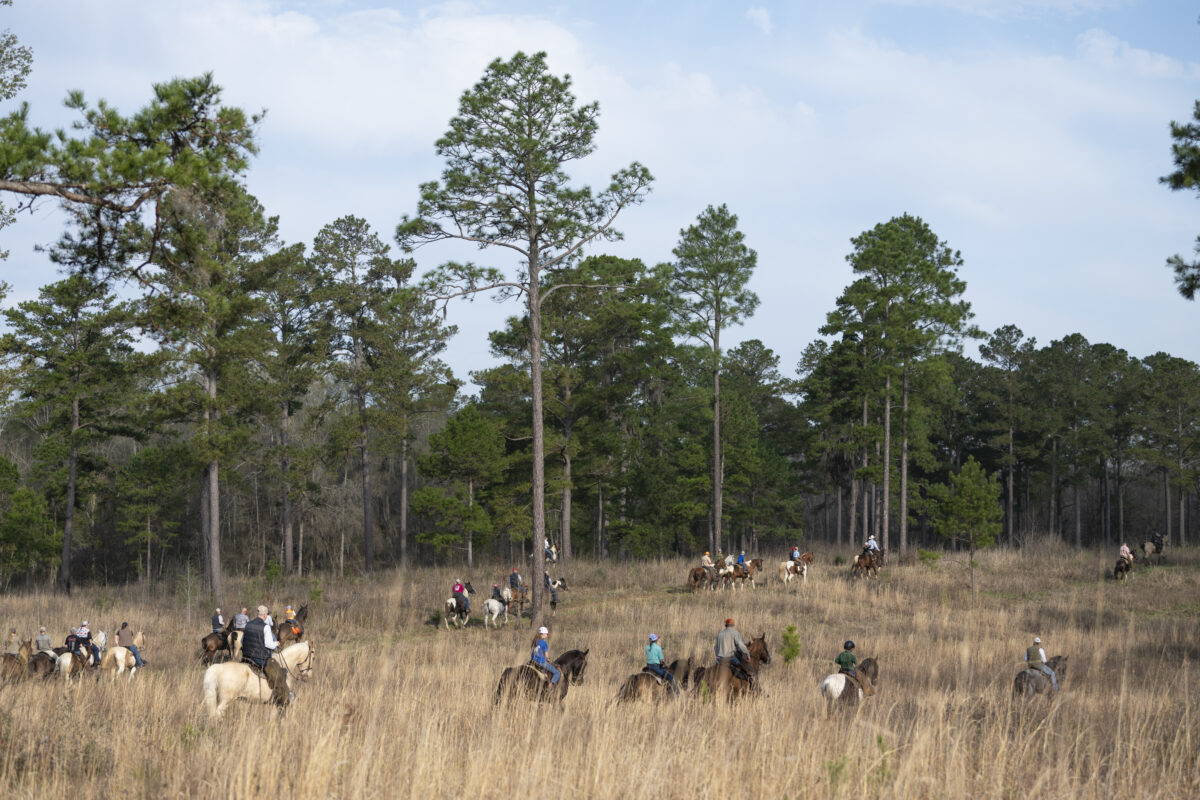
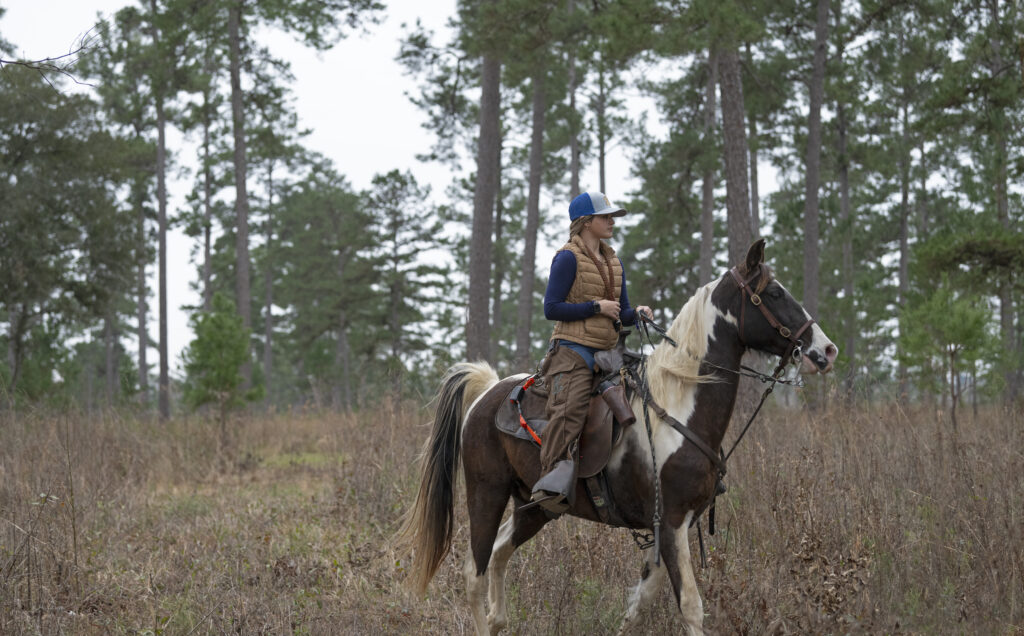
A field trial party winds its way through the piney woods of Southwest Georgia. A far-off voice carries through the trees, “singing” to a bird dog. It isn’t the deep, familiar tone of a seasoned pro—it’s several notes higher. Out from behind the cover comes its source: a young handler, perhaps 15 or 16 years old, astride a paint Tennessee Walking Horse. Her voice may be soft and not able to reach out long distances but, no doubt, it conveys confidence and authority. There’s another young rider, he’s scouting. He’s focused and like the handler, does not take his eyes off the dog now crossing the front. He carefully weaves through the large gallery to the other side of the course, staying well behind the judges—just where he should be.
Suddenly, our keen-eyed scout hollers, “Point!” and the pace quickens. Judges and gallery follow the handler. Her cap is held high as she spurs her horse toward the dog—standing staunchly between two longleaf pines, head and tail held high about eighty yards to the front. She calmly dismounts, steps in front of her dog and gives a single “whoa” command just as the covey bursts from the cover to the sharp ring of her blank pistol. Welcome to a youth field trial!
Youth Field Trial Alliance (YFTA) was founded in 2019. After attending several youth trials across Southwest Georgia, North Florida, and Alabama—and learning how long Alabama field trial clubs had been consistently hosting youth trials—it seemed obvious that these events deserved broader recognition. They could also serve as a catalyst, inspiring clubs across the country to follow suit, hosting their own youth trials or stakes.
From One Tiny Spark
Drawing on my professional background in design, marketing, and photography, along with years of experience as a field trialer with active involvement in clubs and organizations that highlight bird dogs and upland bird hunting, I launched an initiative to promote and advance youth field trials. The effort began under the banner of Strideaway, the online publication devoted to field trials which I co-founded with Mazie Davis in 2008. Mazie was once an ace reporter for American Field and scout to her Hall of Fame husband, trainer/handler, Colvin Davis. Both fully supported the idea.
Thanks to tremendous, unwavering support—both personal and financial—Youth Field Trial Alliance grew quickly. Within two years it became clear that for it to fully realize its mission, YFTA needed to become a nonprofit organization. At that pivotal moment, longtime field trialer and friend, Claudia McNamee—bringing both boundless enthusiasm and a wealth of business experience—joined the effort. Along with devoted field trial supporter, Patty Ewer, YFTA achieved 501(c)(3) nonprofit status in the summer of 2023.
This past October, we welcomed another enthusiast, successful business woman, Allison Daniels to our board. Her lifetime of experience in the field trial world will prove an invaluable addition to YFTA. She and her husband, professional breeder, trainer, and accomplished handler, Jamie Daniels are fully on board with the mission.
Priming for the Future
Traditionally, most young people who found their way into the field trial sport were those raised in field trial families, but there were other avenues. Amateurs like myself, hark back to the days of weekend trials. They were the backbone of our sport and how many of us got our start. Local clubs hosted one or two trials throughout the season, offering both half-hour amateur and open stakes, with some clubs ending the season hosting a championship. At the more popular events, it sometimes took an exerted effort to get every dog run in the course of two days, but it was managed. By late Sunday afternoon, trialers—having spent an enjoyable two days with friends—headed home, already planning to attend the next trial.

These events certainly still exist today, but they are far fewer in number. Many clubs now host hour-long “qualifying” stakes along with derby stakes, making it near impossible to complete a trial in the course of a weekend, thus limiting participation and shifting the focus solely on winning championships.
Weekend trials were true family affairs, introducing kids to every aspect of the sport. Today, with their loss and countless outdoor activities competing for young people’s attention, we must prioritize and encourage youth participation in some other way if we want our sport to thrive in the future.
We—the field trial community, and it is a community in the truest sense—hold the future of our sport in our hands. Unlike horse sports that have organizations like 4-H and Pony Club to involve children, we rely entirely on ourselves to maintain and grow our sport. Field trialing has always depended on its membership to make things happen. Clubs host trials and its members handle all the details, from finding and grooming grounds, selecting judges and reporters, arranging accommodations, and feeding attendees, to countless other details. Running a successful field trial takes planning, effort, time, and preferably a team.
We must ensure the next generation of field trialers has the guidance to become active participants—not just competitors. We can—and should—pass on the sound principles that have guided our sport for well over a century. We owe this to past field trialers who have given so much to this sport for its continuance and for the future of high-class bird dogs from which we derive so much pleasure.
Building on Success
Since its inception, Youth Field Trial Alliance has supported numerous field trial clubs around the country hosting youth events. We’ve assisted new clubs with organizational help and the logistics of running youth trials. We’ve made financial contributions, purchased rosettes, ribbons, trophies, and other prizes, provided judges’ gifts, and covered entry fees, lunches, and snacks. We’ve promoted youth trials and stakes through our website’s Events and News pages, as well as via our robust social media presence and email marketing. We’ve organized youth training clinics and helped with and promoted seminars. Additionally, we’ve supported events in person—helping, judging, reporting, capturing photography and video, and providing winner’s prints. Our website also offers resources for running both walking and horseback youth stakes, and information on the most popular pointing breeds that compete in trials.
In support of both horseback and walking youth trials, we partner with organizations like Southern Bird Hunters Association (SBHA) and National Bird Hunters Association (NBHA) to help promote their efforts. We recognize the importance of walking stakes (NBHA) and encourage clubs to offer them whenever possible. For many families across the country, owning a horse simply isn’t feasible. Our goal is to get kids hooked on bird dogs for life—the trials they compete in as adults will be their choice.
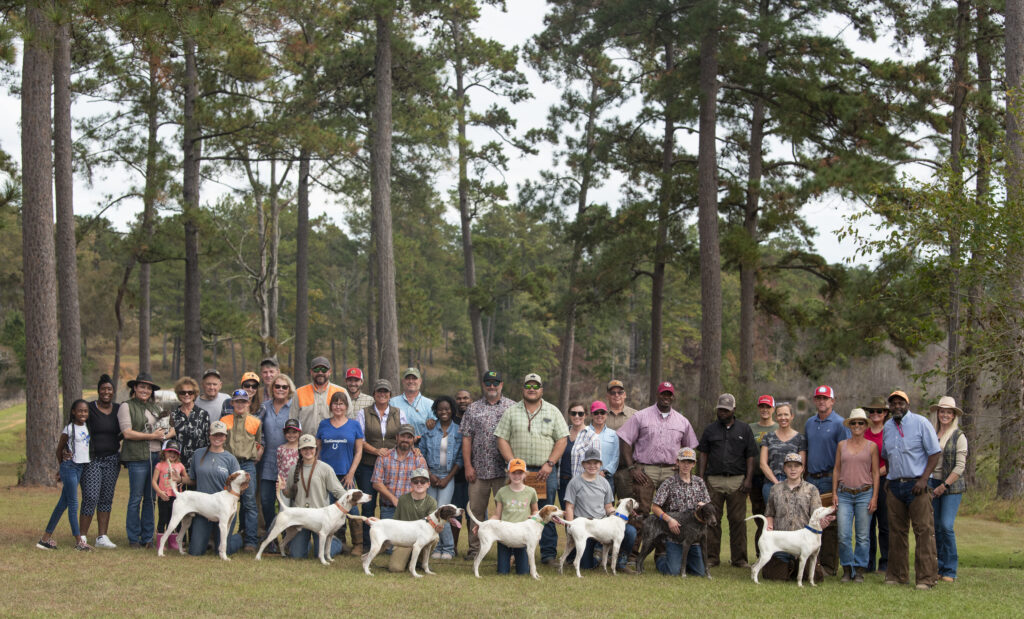
Last year, we launched our Ambassador Program, reaching out to field trialers nationwide to help in any way they can, from hosting youth stakes to simply serving as our eyes and ears in their region. The response has been incredible with well over 50 volunteers from field trial clubs across the U.S. who have joined the effort!
Alabama, Southwest Georgia, and North Florida currently host a dozen youth trials. Many young handlers in this region come from field trial families or quail plantation backgrounds. Having grown up with sporting dogs and horses certainly facilitates an easier path into the sport.
Over 20 years ago, the Alabama Youth Field Trial Association created an award program recognizing the top two youth handlers each field trial season. The Dixie Trace Field Trial Association, representing numerous Southeastern clubs, later adopted a similar program. Points are tallied from participating club trials. Award winners are announced and celebrated at each association’s banquet. Alabama’s Hartley Carter Foundation Scholarship has funded a $1,000 post-high school educational scholarship to Alabama’s Youth Handler of the Year winners since 2009. Alabama’s longevity running youth trials has proven they are a successful pathway to adult trials. Several Alabama youth handlers have gone on to handle or scout winners of significant Shooting Dog championships.
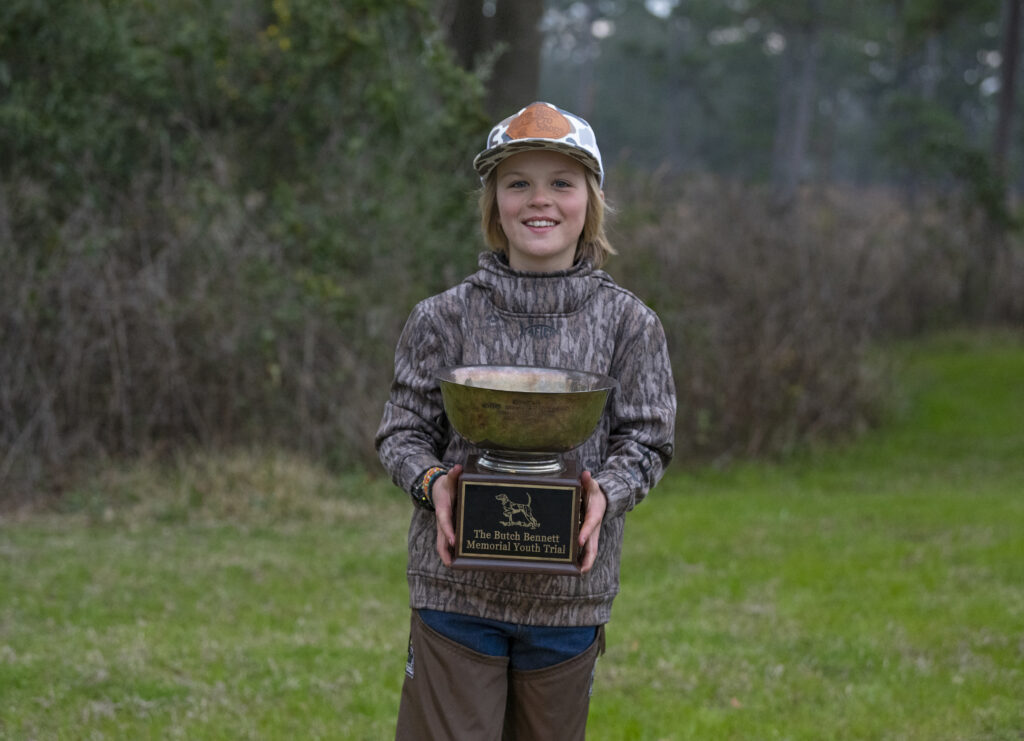
Both these associations offering award programs require host clubs to run youth field trial ads in UKC® Field, ensuring all interested parties have the details and opportunities to enter prior to the drawing. Trials are run to a “Gun Dog” standard as defined by the United Kennel Club’s American Field trials.
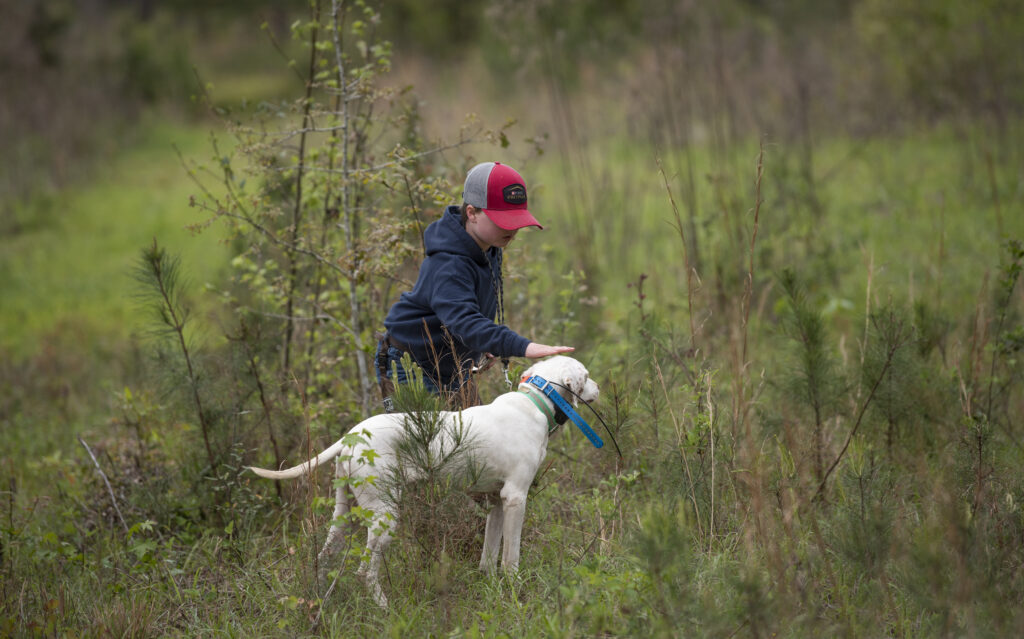
Youth stakes are, however, not officially recognized, meaning registered dogs’ placements are not entered into their official field trial (Field Dog Stud Book) records. Likewise, there is no formal establishment dictating how clubs must conduct youth events. YFTA encourages clubs to consider factors such as age and experience, always keeping in mind that the goal is to ensure young handlers have a positive experience with their dogs. Even if only one, two, or three children participate, give them the opportunity and watch how quickly they progress from one year to the next. Generally, youth trials are for handlers 17 years of age and under. We believe the more closely youth trials resemble the adult sport we hope to usher these youngsters into, the better, making the Gun Dog standard appropriate where the majority of the handlers are advanced enough in their ability to handle their dogs. Adults can act as scouts and help the littlest ones in whatever way they need to but it’s important to allow handlers to do as much as they can on their own. Judges are encouraged to play a more active role, mentoring young handlers to learn “in the moment.”
It’s fair to say our efforts are paying off. Last season, we helped launch the Tall Timbers Youth Field Trial, which was held on Livingston Place in Greenville, Florida. We gave financial help to the fledgling Connecticut Youth Field Trial and Hunting Dog Organization with their first two trials. This past fall, we supported three youth stakes hosted by the English Setter Club of America and Jockey Hollow Field Trial Club, both in New Jersey. At the time of this writing, North Carolina is set to host their first youth trial.
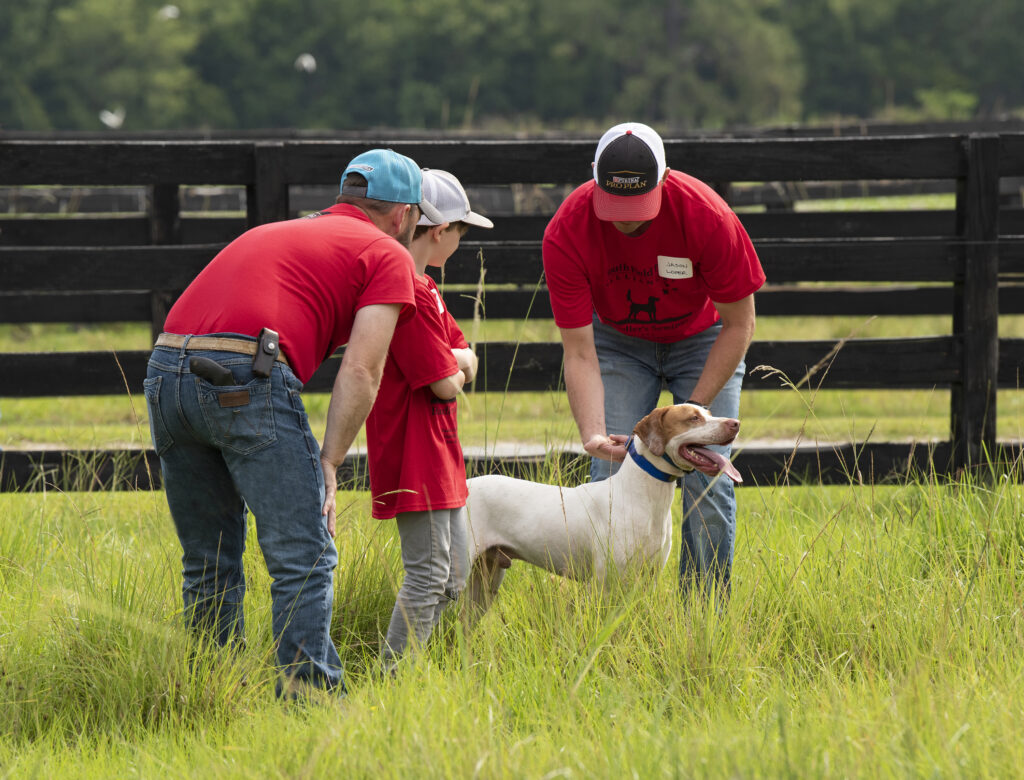
The Road Ahead
Field trials aren’t the only venues where YFTA is promoting youth events. For the sixth year, we’ve been invited to participate in the spectacular Kevin’s Southern Game Fair, held each November in Thomasville, Georgia. Youth handlers put on field trial demonstrations, showcasing the sport and speaking to attendees. It’s an invaluable opportunity to introduce a new audience to pointing dog field trials, spark interest, and connect with the broader sporting community. Several other important opportunities to broaden our reach nationally are also in the works.
Lastly, and perhaps most importantly, engaging boys and girls in youth field trials delivers far-reaching benefits. The sport encourages physical and mental wellbeing by keeping young people active outdoors and away from screens, while teaching responsibility through caring for and working with animals. It builds confidence and healthy competition and fosters essential social skills such as friendship, cooperation, and sharing. Youth field trials also cultivate a lifelong love of the outdoors, including dogs, horses, and wildlife, and connect young people with their local communities, deepening their understanding and appreciation of longstanding traditions.
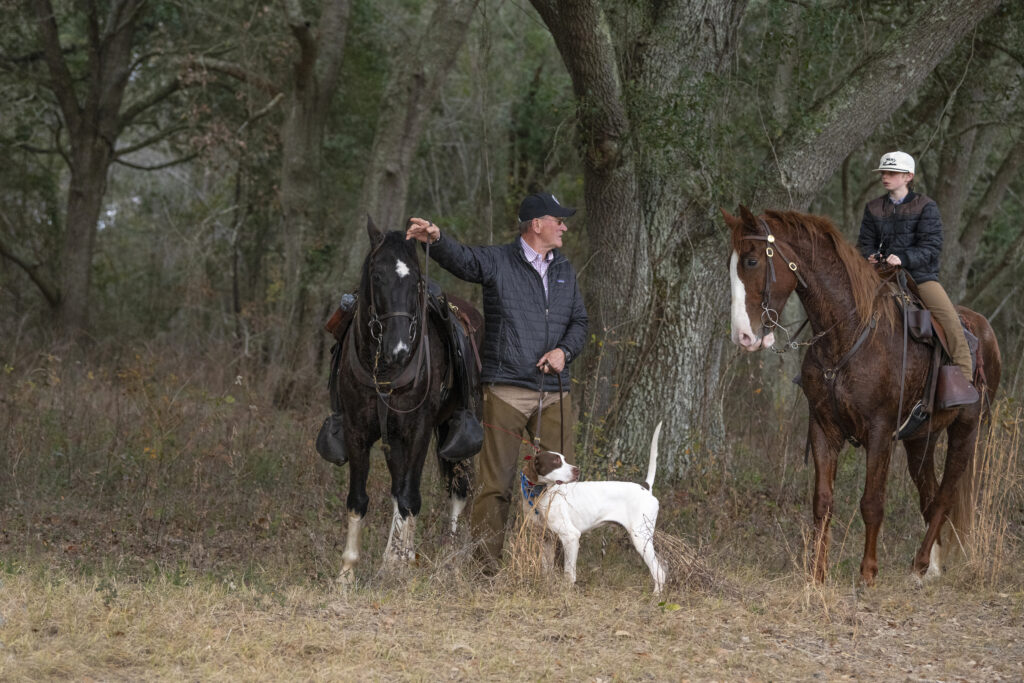
Progress does not always come easily or quickly, but step by step—and with the unwavering support of the field trial community as well as those who care deeply about our “sporting life”—our mission to make youth field trials a permanent fixture in every region of the county is becoming a reality. It’s heartwarming to watch youngsters, especially first-time handlers, compete with their bird dogs. It strengthens our resolve to help bring the joy of bird dog field trials and the great outdoors to youngsters throughout the country!
